Reimagining the Shoreline: A Restoration Project on Lake Tapps
june 8, 2026
Introduction
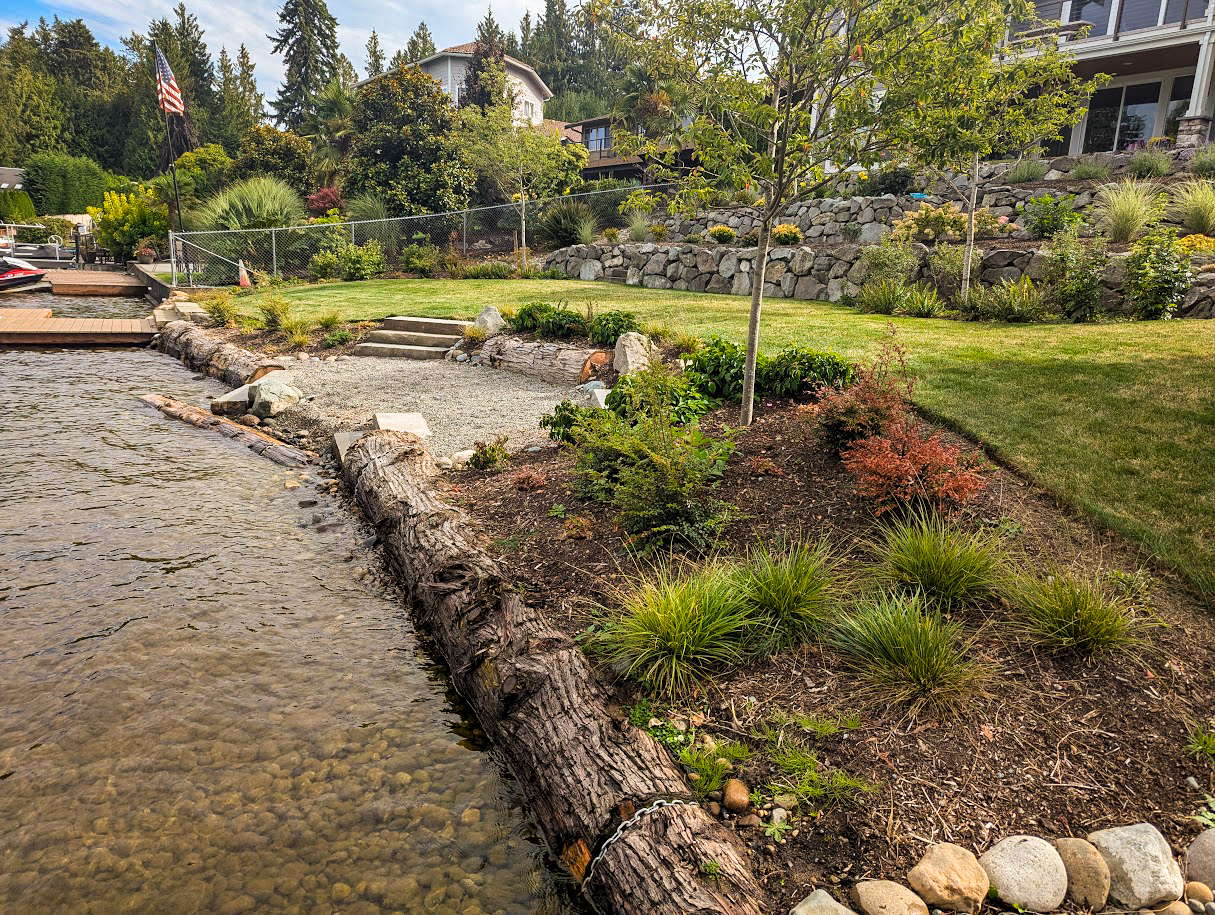
Waterfront landscapes are always changing. Water levels shift, shorelines erode, plants evolve, and the boundary between land and lake is constantly reshaped over time. This shoreline restoration project on Lake Tapps was designed with that natural movement in mind — creating a landscape that feels more connected, resilient, and grounded in its environment.
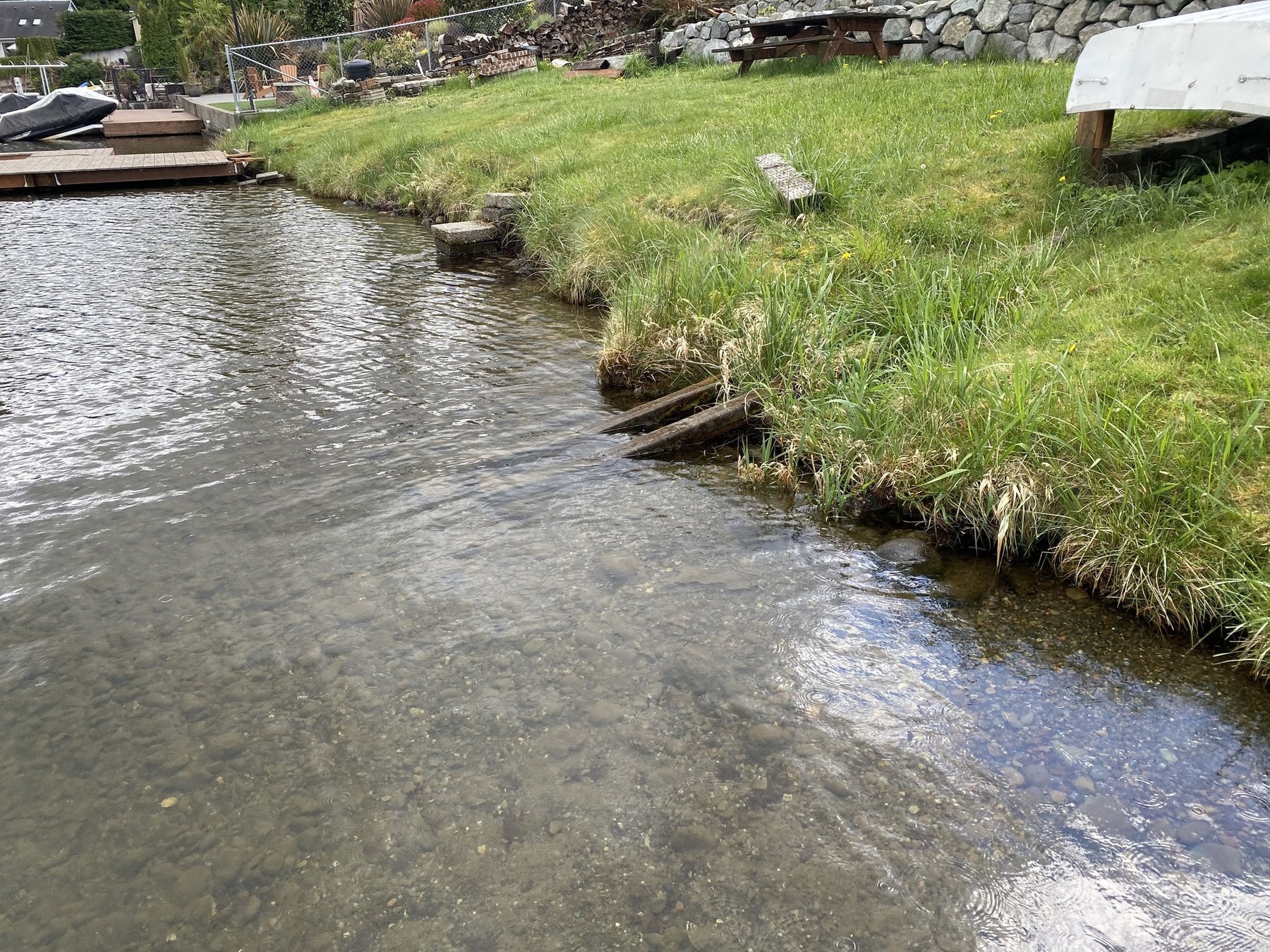
The existing shoreline had become worn and fragmented over the years. Erosion, invasive vegetation, and hardened edges had weakened both the ecological health of the site and its relationship to the lake. Rather than forcing a heavily engineered solution onto the property, our goal was to restore a more natural balance between the built landscape and the shoreline itself.
From the beginning, the focus was on working with the site instead of against it.
The problem with traditional shorelines
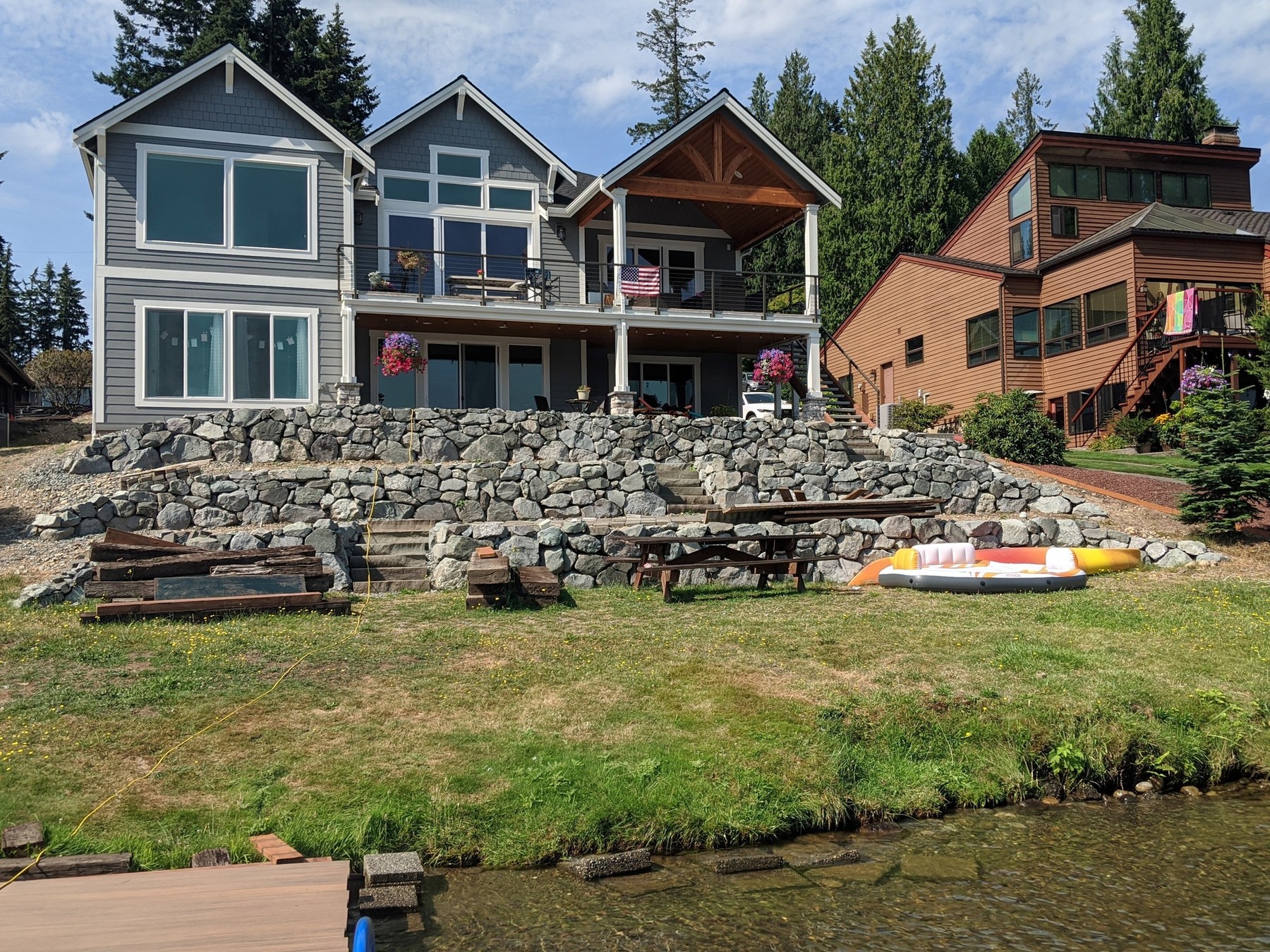
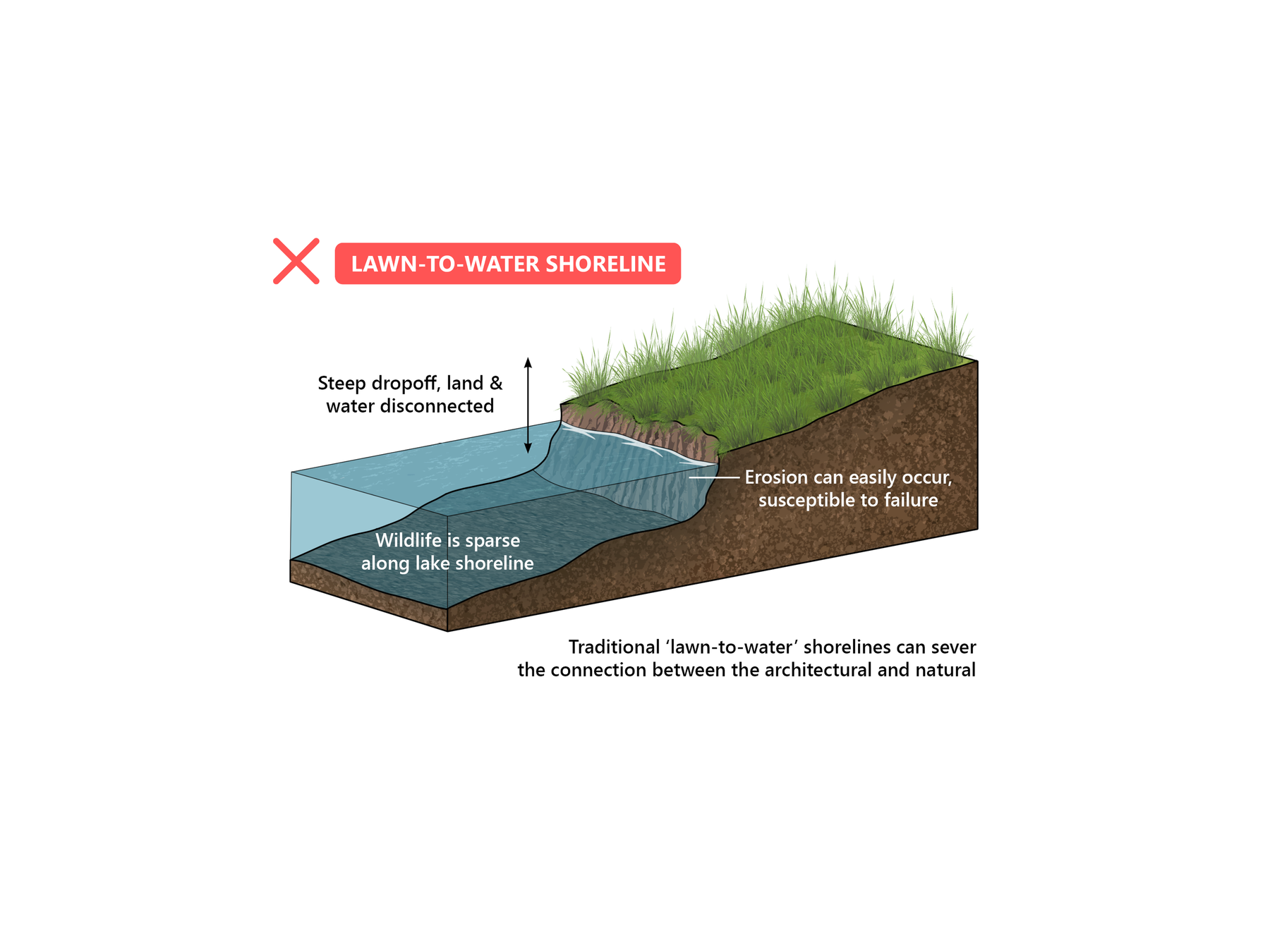
For decades, many waterfront properties were designed around hard bulkheads and expansive lawn areas extending directly to the water’s edge. While visually clean and straightforward, these approaches often create long-term environmental and structural challenges for the shoreline.
Traditional bulkheads interrupt the natural relationship between land and water. Over time, they can increase wave reflection and contribute to erosion along adjacent shoreline areas rather than solving the issue entirely. They also limit habitat opportunities for fish, pollinators, and other shoreline-dependent species.
Similarly, lawn-to-water conditions tend to create shallow root systems that do very little to stabilize soil over time. These landscapes often require excessive irrigation, fertilizer, and maintenance while allowing runoff to move directly into the lake.
Beyond ecological concerns, hardened shoreline edges can also feel visually disconnected from the surrounding environment. The transition between architecture, landscape, and water becomes abrupt rather than gradual.
This project aimed to move away from those conventional shoreline strategies in favor of a softer, more adaptive landscape approach — one that allows vegetation, topography, and ecological systems to work together naturally over time.
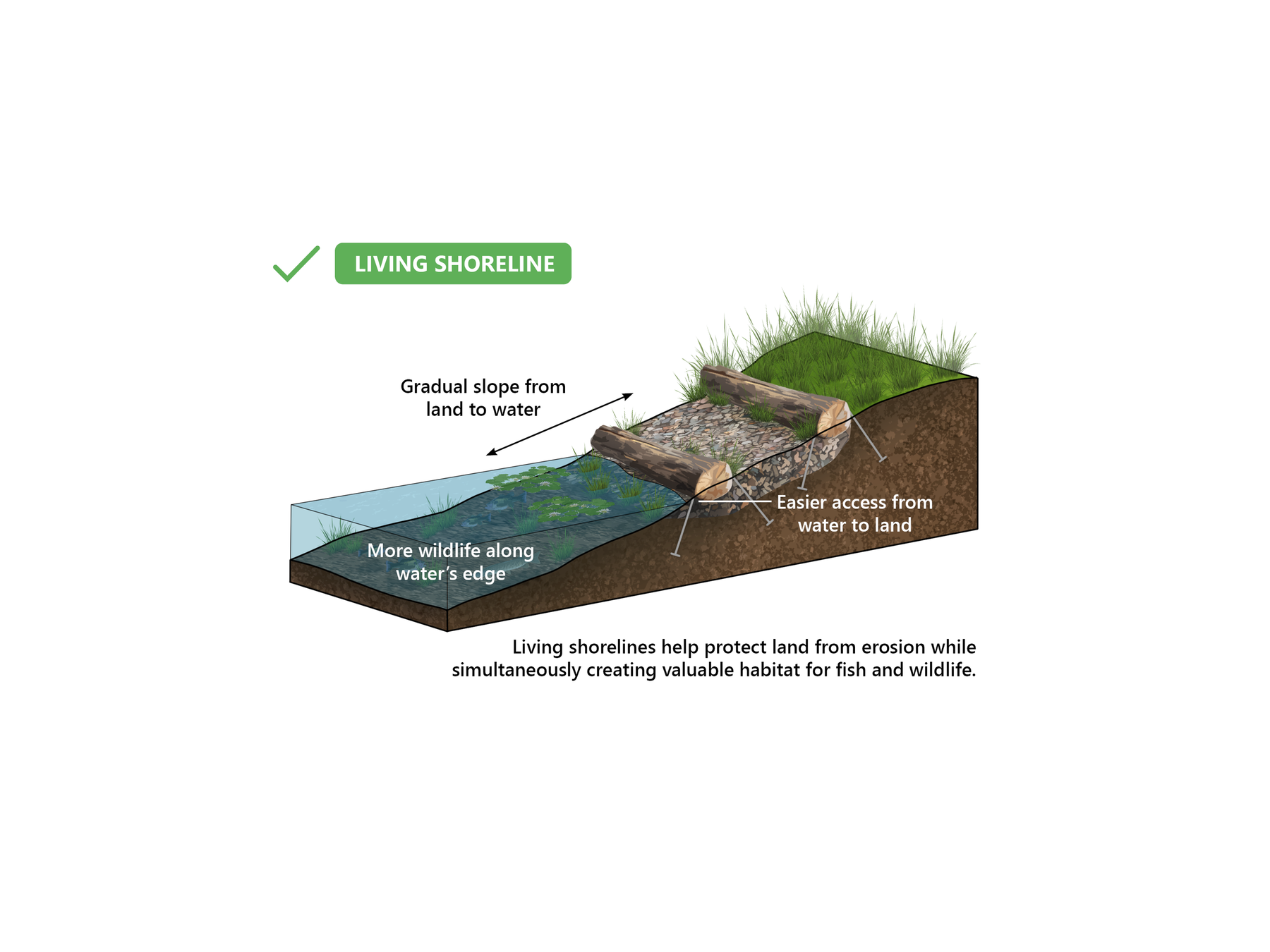
A more natural approach to shoreline design
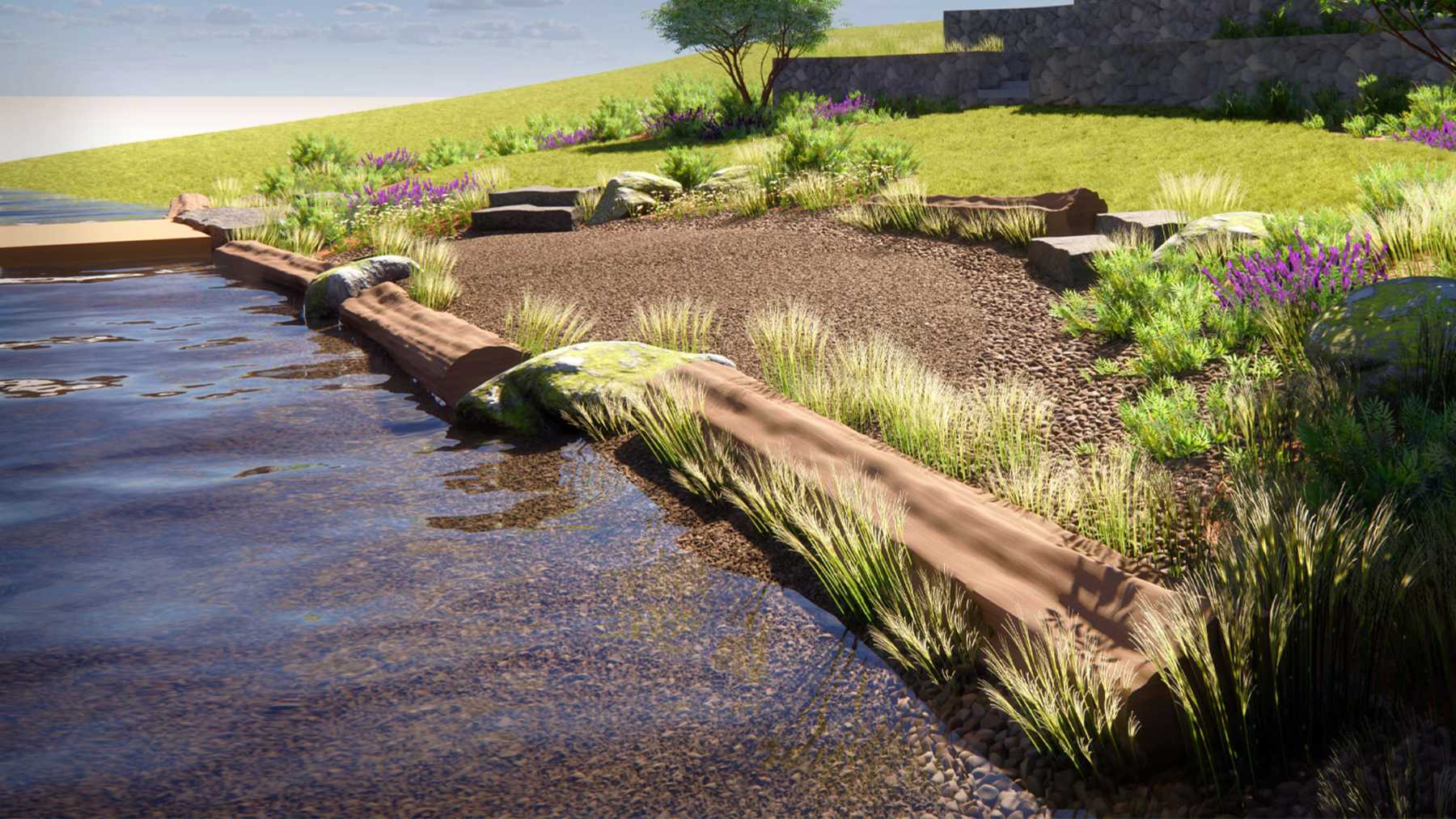
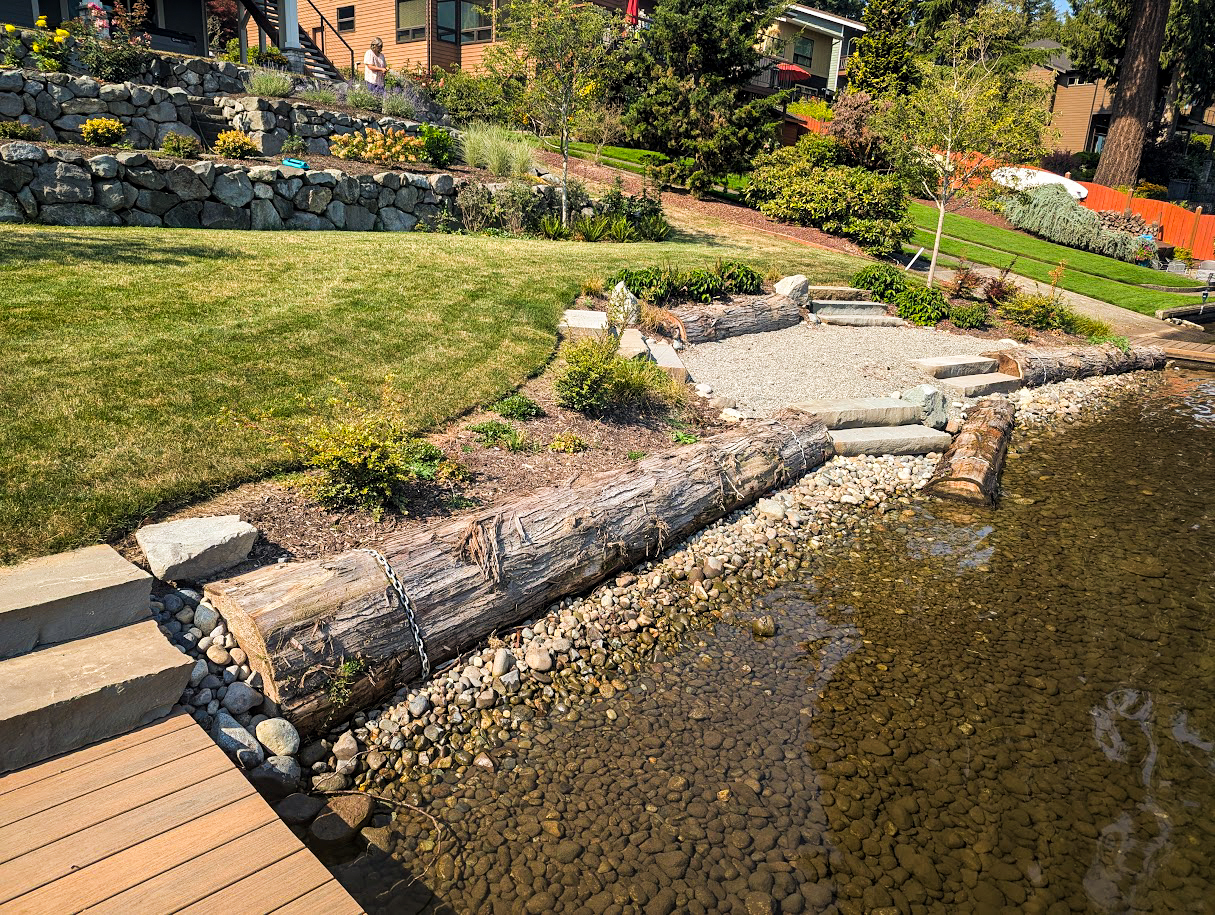
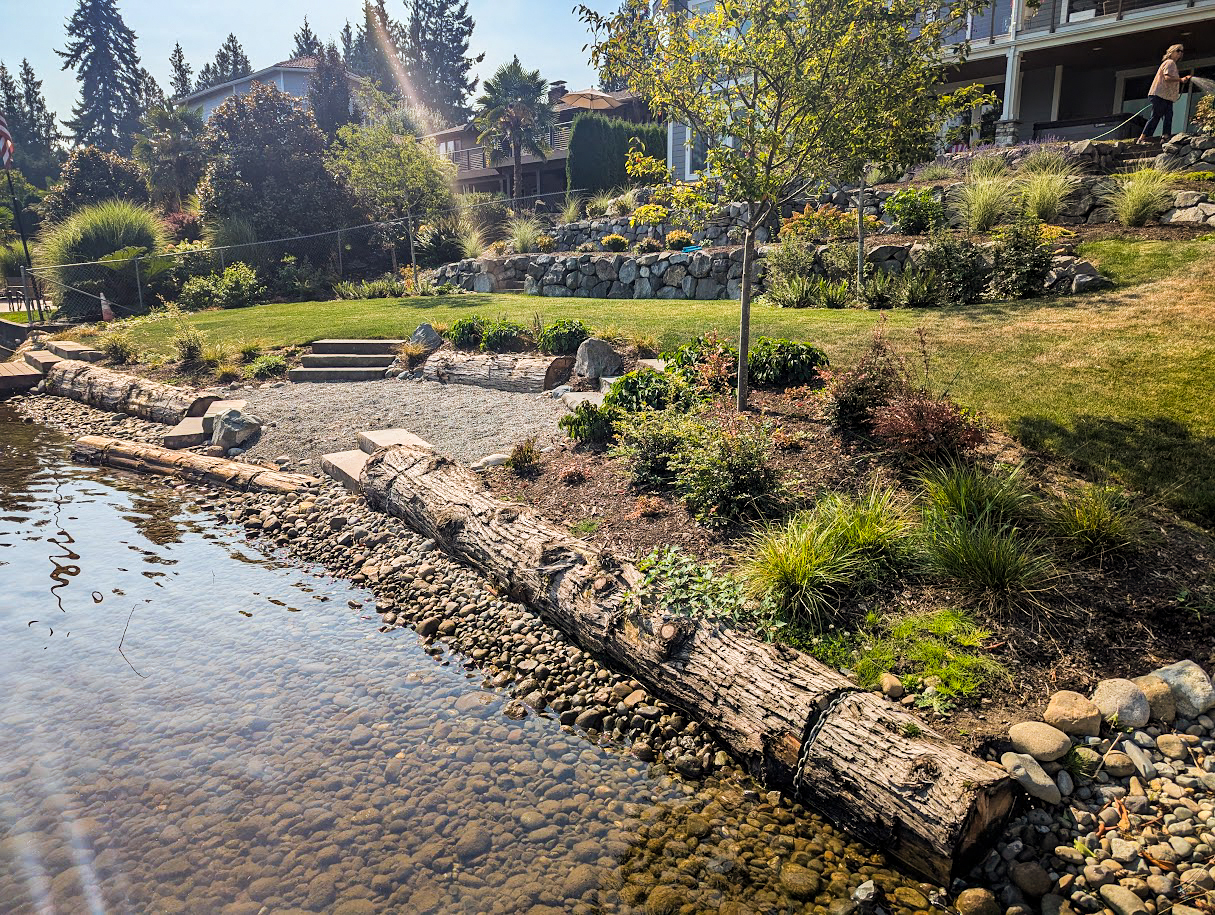
Material restraint was an important part of the overall design language. Structural shoreline elements were integrated carefully and intentionally so the landscape itself remains the focus.
Rather than creating a shoreline that feels rigid or overbuilt, the goal was to create something that feels timeless and appropriate to the setting — a landscape that appears as though it has always belonged there.
designing for change over time
Shoreline landscapes are never static. They evolve season by season and year by year.
One of the most rewarding aspects of restoration work is watching the landscape gradually settle into itself as plants establish, ecological systems strengthen, and the shoreline begins to function more naturally again.
This project was ultimately about more than stabilization alone. It was about restoring a relationship between the home, the land, and the water — creating a shoreline experience that feels enduring, immersive, and deeply connected to Lake Tapps.